

Now Reading: Read This Before Buying the TiZO₃ Facial Mineral Sunscreen Tinted SPF 40
-
01
Read This Before Buying the TiZO₃ Facial Mineral Sunscreen Tinted SPF 40

This post may contain affiliate links. Please read our full disclosure here.
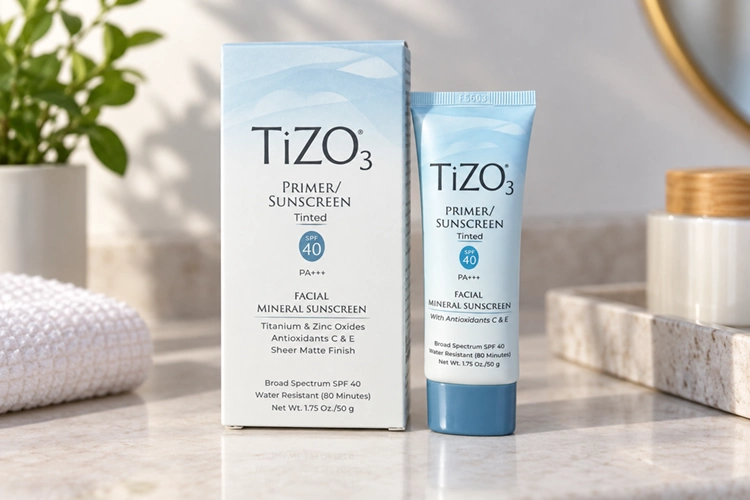
Brand: TiZO₃
Format: Cream, Primer/Sunscreen
Activity & Use Case: Daily Face Wear, Makeup Primer
Filter Type: Mineral
SPF Level & Broad Spectrum: SPF 40, Broad Spectrum, PA++++
Active Ingredients: 8% Titanium Dioxide, 3.8% Zinc Oxide
Fragrance: Fragrance-Free
Water Resistance: 80 minutes
Special Features: Vegan, Cruelty-Free, Reef-Friendly, Oil-Free, Preservative-Free, Antioxidants C & E
Price: Approximately $47.00 for 1.75 oz / 50 g
I have tried enough facial sunscreens to know that “mineral,” “tinted,” and “for sensitive skin” do not automatically mean a product will work beautifully in real life. TiZO₃ Facial Mineral Sunscreen Tinted SPF 40 caught my attention because it takes a more clinical approach: a 100% mineral sunscreen, a silicone-based texture, a soft-matte finish, and a sheer tint designed to make daily wear easier.
My skin is combination and fairly sensitive, with an oilier T-zone, occasional breakouts, and some redness around my cheeks. I also notice dryness when I use too many mattifying products, so I am always looking for that middle ground between “too greasy” and “why does my face suddenly look flaky?”
After spending time with TiZO₃, I understand why it has such a strong clinical reputation. It is not the most conventional sunscreen experience, but there is a lot to appreciate once you understand what its formula is trying to do.
The Quick Verdict
Overall Rating: 8.2/10
Best For: Sensitive, oily, combination, acne-prone, or post-procedure skin, especially if you prefer a soft-matte, pore-blurring finish.
Skip This If: You have very dry or flaky skin, or if a universal tinted shade is unlikely to work with your deeper skin tone.
Packaging & Design
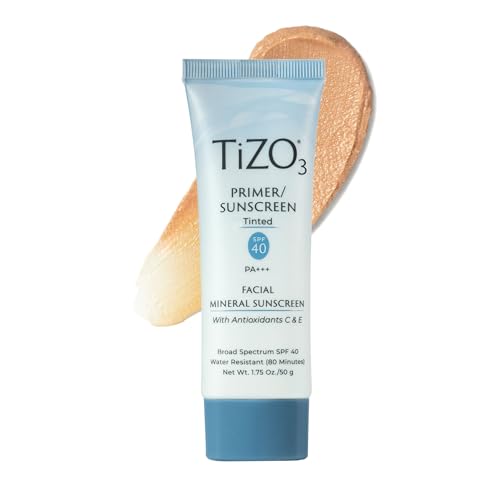
TiZO₃ comes in a 1.75 oz (50 g) opaque squeeze tube with a narrow dispensing opening and threaded cap. The tube is made from a recyclable polyolefin material, and its completely opaque construction is intended to protect the formula from light exposure.
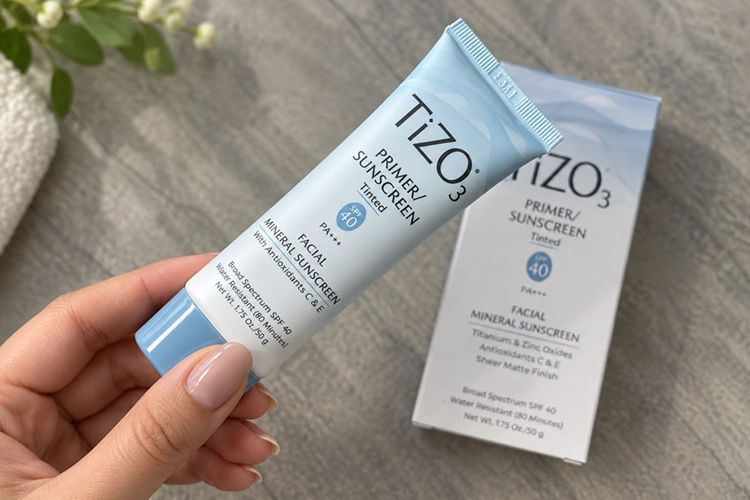
I actually like this style of packaging for sunscreen. It is compact, lightweight, easy to throw into a bag, and less fussy than a pump bottle. The narrow opening also gives me good control over how much comes out, which matters because sunscreen application is one place where accidentally dispensing too little is very easy.
One small annoyance is that I cannot see how much product remains. Because the tube is opaque, I have to judge the remaining amount by how heavy it feels or how compressed the tube becomes. The upside is that the packaging is travel-friendly, with the 1.75 oz size comfortably below the common 3.4 oz carry-on limit.
Sun Protection & Formula
This is where TiZO₃ becomes much more interesting than a typical tinted moisturizer with SPF. Its active sunscreen system uses 8% Titanium Dioxide and 3.8% Zinc Oxide, giving it a completely mineral filter system. It is labeled SPF 40 with PA++++ UVA protection, and it is rated for 80 minutes of water and sweat resistance.
Titanium dioxide and zinc oxide are mineral filters that protect primarily by interacting with incoming UV radiation at the skin’s surface rather than relying on the same type of organic UV-filter system found in many chemical sunscreens. In this formula, titanium dioxide contributes strongly to UVB and shorter UVA wavelengths, while zinc oxide broadens protection further into the longer UVA range.
Another detail I found especially interesting is the inclusion of iron oxide (CI 77491). It is part of the tint, but it is doing more than simply making the sunscreen look less white. Iron oxides can also help attenuate portions of high-energy visible light, which is particularly relevant when pigmentation and melasma are concerns.
Key Ingredients
- Titanium Dioxide 8%: Provides mineral UV protection, particularly across UVB and shorter UVA wavelengths.
- Zinc Oxide 3.8%: Helps broaden protection into the UVA spectrum, including longer UVA wavelengths.
- Iron Oxide (CI 77491): Provides the sheer tint and helps reduce some visible-light exposure.
- Tetrahexyldecyl Ascorbate: A lipid-soluble, stable form of vitamin C included for antioxidant support.
- Tocopheryl Acetate: A vitamin E derivative that adds antioxidant support to the formula.
The formula is also waterless, built around an anhydrous silicone matrix. That helps explain both its unusual texture and its water-resistance properties.
Texture & Finish
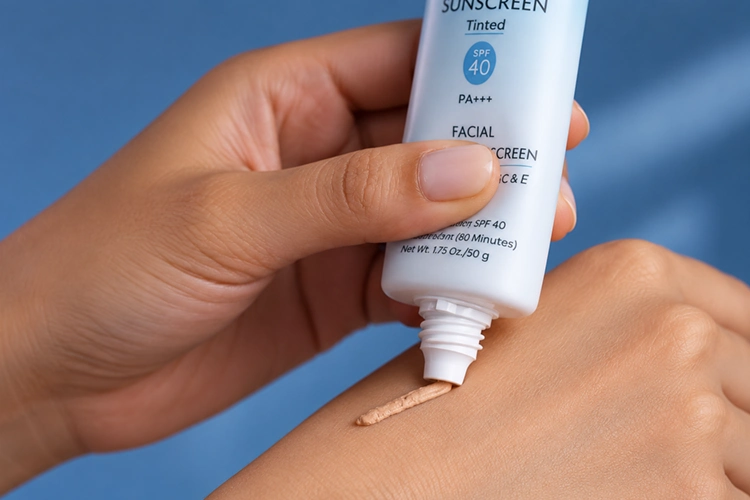
The first time I squeezed TiZO₃ onto my hand, I understood immediately that this was not going to behave like a fluid sunscreen. It comes out as a dense gel-balm, almost thicker than I expected from a facial SPF.
The funny thing is that the texture changes as soon as I start spreading it. The silicone network becomes easier to distribute with friction, so what initially looks dense becomes surprisingly workable across the skin.
After roughly 30 to 60 seconds, the volatile silicones dissipate and leave behind a smooth, velvety film. The final effect is soft-focus matte, rather than a powdery or flat-looking dry finish.
I especially noticed the blurring effect around pores and small areas of uneven texture. The finish scatters light instead of reflecting it strongly, which gives the skin that softly diffused “cloud skin” appearance.
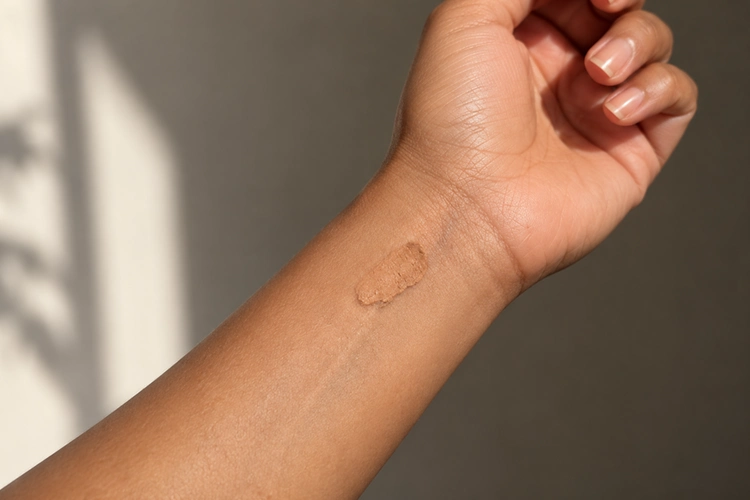
The tint is useful, too. On lighter through medium complexions, it is designed to neutralize the obvious white cast that can come with mineral filters. On deeper skin tones, though, the universal tint can potentially look grey or ashy because of the relatively high titanium dioxide load. If you prefer to avoid a tinted finish altogether, TiZO also offers a non-tinted alternative called TiZO₂ Facial Mineral Sunscreen and Primer SPF 40. It provides the same SPF 40 mineral-sunscreen-and-primer concept without the added tint, so it may be worth considering if you prefer an untinted formula or want to avoid choosing between a universal shade and your natural skin tone.
Scent
TiZO₃ is fragrance-free, and that is something I genuinely appreciate in a face product. There are no added synthetic perfumes, essential oils, or fragrance-masking agents.
I can detect a very faint raw silicone-like smell when I first apply it, but it is subtle and disappears quickly. It does not leave the sort of perfume trail that some sunscreens do.
For anyone whose eyes tend to water or sting from fragranced facial products, the absence of added fragrance is a meaningful advantage.
Skin Type & Compatibility
This is one of the areas where TiZO₃ makes the strongest case for itself. The formula is oil-free, fragrance-free, preservative-free, and designed without fermentable lipids, plant oils, or polysorbates, making it particularly appealing to people who are selective about ingredients.
For my combination skin, the finish works especially well when I want to control shine without reaching for a separate powder. I can also see why this type of formula appeals to acne-prone and sensitive users.
The post-procedure angle is particularly notable. Its waterless silicone film is designed to be non-stinging and protective, and it is commonly positioned for use around procedures such as peels, lasers, and microneedling.
That said, I would not call it perfect for everyone. If your skin is severely dry or visibly flaky, the matte mineral-and-silicone combination can emphasize those patches. The recommendation is to make sure the skin underneath is well moisturized first.
Wearability & Daily Life
My favorite thing about TiZO₃ is how easily it can replace more than one step in a morning routine. The silicone film gives it the feel of a pore-blurring makeup primer, while the tint provides a little tone-evening effect.
Foundation also sits nicely over the set surface. I find that especially useful on days when I want my base to look smoother without piling several silicone-heavy products on top of one another.
There is one application rule I would take seriously: let watery serums and moisturizers dry completely before applying TiZO₃. Applying it over damp skincare can encourage pilling, while allowing the layers to settle for around two minutes helps create a smoother film.
The tint also has an advantage for photography. Unlike an untinted mineral sunscreen, it is designed to reduce the pale flashback effect that can sometimes make faces look noticeably lighter in photographs.
The trade-off comes at night. Because the formula creates a hydrophobic, water-resistant film, I would not rely on a single gentle cleanser to remove it thoroughly. An oil cleanser or cleansing balm followed by a water-based cleanser is the more practical approach.
Size, Lifespan, & Practicality
The 50 g tube sounds reasonable until I remind myself how much sunscreen I actually need. The recommended facial application amount is approximately 1.25 g, which works out to roughly 40 face-only applications from one tube.
That means a tube can last around 40 days when applied once daily to the face at the recommended amount. Use it twice a day, or extend the application to the neck and chest, and the lifespan drops considerably.
I would rather use the correct amount and finish the tube sooner than stretch it out for months by applying too little. Sunscreen is one category where “making the product last longer” can defeat the purpose.
Brand Reputation & Ethics
TiZO is manufactured by Fallene, Ltd., a company established in 1989 and focused on physical photoprotection. TiZO has been marketed in the U.S. since 2008 and is distributed through professional channels including dermatology practices, medical spas, and authorized retailers.
I also like that the formula is described as cruelty-free and vegan, with no animal-derived ingredients. It is also presented as reef-friendly and free of oxybenzone, octinoxate, and octocrylene.
Those details do not automatically make a sunscreen better on the skin, of course, but they matter to me when two products are otherwise competing for space in my routine.
Price, Value, & Availability
At $47 for 1.75 oz, TiZO₃ is definitely not a drugstore-priced sunscreen. Its listed unit cost works out to about $26.86 per fluid ounce, putting it firmly in the professional clinical skincare category.
That price makes more sense to me when I consider that it combines sunscreen, a makeup primer, and a subtle tint in one product. Still, I would not describe it as a budget-friendly SPF.
It is most readily available through dermatology practices, medical spas, and authorized retailers such as Dermstore and LovelySkin. Some authorized sellers also offer discounts through subscriptions or promotions.
Overall Rating
I would give TiZO₃ Facial Mineral Sunscreen Tinted SPF 40 8.2 out of 10.
For my combination, sensitive skin, the combination of mineral protection, a fragrance-free formula, soft matte finish, tint, and primer-like smoothing makes this a very compelling everyday sunscreen. I especially like that it feels more like a polished complexion product once it sets rather than something I have to tolerate for the sake of SPF.
The biggest reasons I am not giving it a perfect score are the single universal tint, which may not suit deeper complexions, and the tendency of the matte finish to expose dryness. The premium price also means I would want to be fairly confident it suits my complexion and skin needs before making it a permanent staple.

Tips & Recommendations
My biggest tip is to moisturize strategically rather than skipping moisturizer altogether. If you have dry areas, give those spots enough hydration before applying TiZO₃, but wait until your skincare has fully absorbed.
I also recommend applying it in an organized way rather than trying to rub a large amount around randomly. The formula becomes more spreadable with friction, but it still benefits from careful, even application.
For makeup days, I would give the sunscreen time to settle before applying foundation. That short wait helps the silicone film develop and reduces the chance of pilling.
And there is one recommendation I consider especially important: check the tint against your actual skin before committing to the full routine. The formula can look impressively seamless on light-to-medium skin, but the same universal shade may not disappear as naturally on deeper complexions.
Ultimately, TiZO₃ is the kind of sunscreen I would recommend to someone who wants more than basic UV protection. It combines mineral photoprotection, visible-light-conscious tinting, antioxidant support, water resistance, and a primer-like finish in one thoughtfully constructed product.
It is not universally perfect, but for the right skin type and complexion, I can absolutely understand why this clinical-style sunscreen has earned a loyal following.
TiZO₃ Facial Mineral Sunscreen Tinted SPF 40
- 100% mineral SPF 40 with titanium dioxide and zinc oxide.
- PA++++ UVA protection and 80-minute water and sweat resistance.
- Smooth soft-focus matte finish that can blur pores and texture.
- Fragrance-free and without essential oils.
- Iron oxide tint helps reduce the typical mineral white cast and visible-light exposure.
- Can double as a makeup primer.
- Particularly appealing for sensitive, oily, acne-prone, and post-procedure skin.
- Cruelty-free and vegan.
- The universal tint may look ashy or grey on deeper skin tones.
- Matte texture can emphasize dry or flaky patches.
- Requires more thorough cleansing at night.
- The $47 price is considerably higher than many everyday drugstore sunscreens.
- The opaque tube makes it difficult to judge exactly how much remains.