

Now Reading: I Tested Caudalie Vinosun Protect Daily Mineral Sunscreen for 30 Days: Here is My Honest Review
-
01
I Tested Caudalie Vinosun Protect Daily Mineral Sunscreen for 30 Days: Here is My Honest Review
I Tested Caudalie Vinosun Protect Daily Mineral Sunscreen for 30 Days: Here is My Honest Review

This post may contain affiliate links. Please read our full disclosure here.
Brand: Caudalie
Format: Fluid Lotion
Activity & Use Case: Daily Face Wear, Everyday Urban Use, Sun Protection for Pigmentation-Prone Skin
Filter Type: Mineral
SPF Level & Broad Spectrum: SPF 50+, Broad-Spectrum Protection
Active Ingredients: 21.1% Non-Nano Zinc Oxide (sole active UV filter); Niacinamide and Viniferine for skin-tone and barrier support
Fragrance: Fragrance-Free
Water Resistance: None (Not Water-Resistant)
Special Features: Vegan, Cruelty-Free, Silicone-Free, Non-Comedogenic; Marine-Conscious
Price: Approximately $39 USD for a 50 ml (1.7 fl oz) bottle in the United States; approximately $53 CAD in Canada.
Finding a mineral sunscreen that protects my skin without leaving me looking ghostly, greasy, or completely washed out has always felt like a beauty challenge. So, I decided to take a closer look at Caudalie Vinosun Protect Daily Mineral Sunscreen SPF 50, a premium French skincare favorite that promises broad-spectrum protection alongside ingredients designed to support a more even complexion.
My biggest questions were simple: Does it live up to its skincare claims, is the texture genuinely comfortable for everyday wear, and is it worth spending $39 on sunscreen?
For context, I have combination, sensitive skin with an oilier T-zone, occasional redness across my cheeks, and lingering post-acne dark spots. I prefer fragrance-free products and lightweight textures, but I also need something that offers reliable sun protection without turning my morning routine into a complicated science experiment.
The Quick Verdict
Overall Rating: 8.2/10
Best For: Sensitive, combination, and pigmentation-prone skin; anyone looking for fragrance-free mineral SPF 50 with brightening ingredients and a radiant, dewy finish.
Skip This If: You have a deeper skin tone and want a completely invisible, no-white-cast finish; prefer a matte sunscreen; need water resistance for swimming or intense workouts; or are looking for a more budget-friendly daily SPF.
Packaging & Design
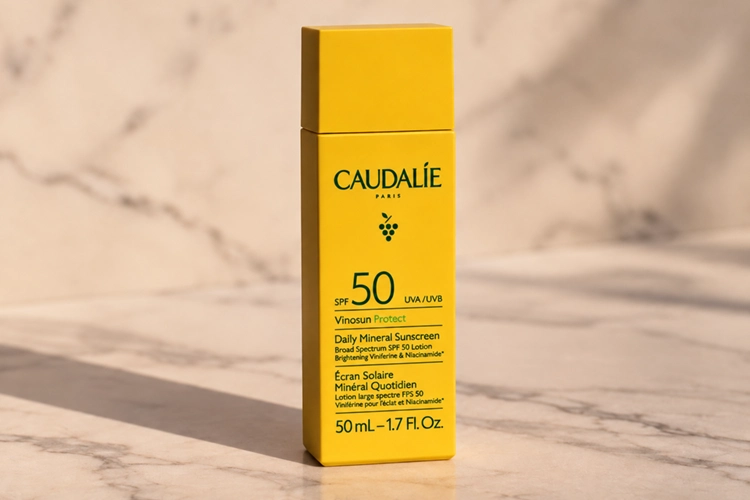
First impressions? The bright yellow packaging is cheerful, instantly recognizable, and refreshingly different from the minimalist white sunscreen tubes that seem to dominate skincare shelves. The bottle feels compact and practical, with a slim shape that slips easily into a handbag or travel toiletry bag.
The sunscreen comes in a 50 ml (1.7 fl oz) opaque squeeze bottle with a small dispensing nozzle. I like the idea of a narrow opening because it makes controlling a fluid formula easier and helps prevent unnecessary waste.
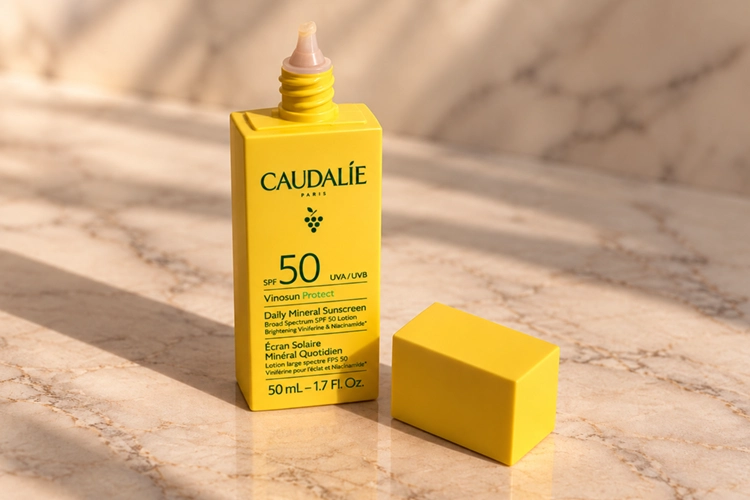
There is one important catch, though: shake the bottle thoroughly before every application. The formula contains a high concentration of mineral zinc oxide, and the particles can settle when the bottle sits unused. Skipping this step may leave you dispensing a watery, uneven mixture instead of a properly blended sunscreen.
The opaque packaging protects light-sensitive botanical ingredients, but it also means I cannot easily see how much product remains. I would also wipe the nozzle after use to prevent dried product from collecting around the cap.
Sun Protection & Formula
The most important thing about any sunscreen is its ability to protect my skin, and this formula offers broad-spectrum SPF 50 protection using zinc oxide as its sole active UV filter.
Specifically, it contains 21.1% non-nano zinc oxide. Zinc oxide helps protect against UVB rays, which are strongly associated with sunburn, and UVA rays, which contribute to premature skin aging and pigmentation. It is also photostable, meaning it does not readily break down under sunlight.
I appreciate that this is a genuinely mineral formula rather than a hybrid sunscreen combining mineral and chemical UV filters. However, I would not confuse that distinction with a guarantee that every skin type will find the texture or finish perfect.
The formula is designed primarily for everyday wear rather than swimming or intense exercise. It is not water-resistant, so I would choose a specifically water-resistant sunscreen for beach days, sweaty workouts, or prolonged exposure to water. For ordinary daily wear, I would still follow the product directions and reapply at least every two hours when exposed to sunlight.
Key Ingredients
- Zinc Oxide (21.1%): The mineral UV filter responsible for broad-spectrum SPF 50 protection. It works across UVA and UVB wavelengths and is often a useful option for people who prefer mineral sunscreens.
- Niacinamide (Vitamin B3): Helps support the skin barrier, encourages ceramide production, and can improve the appearance of uneven skin tone over time.
- Viniferine: A grapevine-derived ingredient associated with Caudalie’s brightening skincare range. It targets processes involved in excess pigmentation and is included to help address the appearance of dark spots.
- Bentonite Clay: Helps absorb excess oil, which may be appealing if your T-zone tends to become shiny during the day.
- Butyloctyl Salicylate: A multifunctional ingredient that helps with the formula’s dispersion and contributes to its SPF performance.
- Safflower-Derived Oleosomes and Plant Esters: Help create a smoother, more spreadable texture without relying on traditional silicone-based slip agents.
- Plant-Derived Squalene: Helps support the skin’s moisture barrier and contributes to a more comfortable feel.
What makes this formula interesting is that it combines sun protection with ingredients commonly found in brightening and barrier-supporting skincare. That is particularly relevant for anyone concerned about post-acne marks, uneven pigmentation, or melasma, although sunscreen cannot replace targeted treatment when pigmentation is persistent.
Texture & Finish
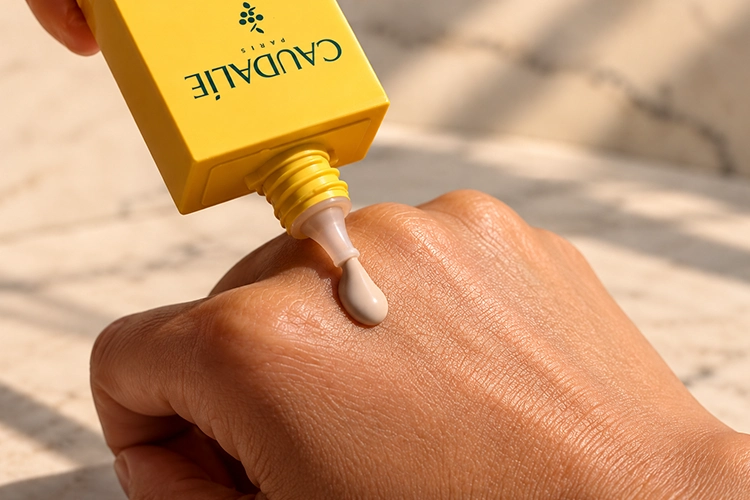
This is where Caudalie’s formula becomes more interesting than the typical thick mineral sunscreen. The product has a fluid, milky consistency rather than the dense, paste-like texture I usually associate with high-zinc formulas.
One thing I would absolutely recommend is warming the product between your palms before smoothing it onto your face. This helps it spread more comfortably and reduces the dragging sensation that can happen when applying mineral sunscreen over delicate skin.
The formula takes several minutes to settle, eventually leaving a luminous, dewy finish. It is designed to provide some hydration without feeling excessively greasy, sticky, or heavy.
However, I would not describe it as completely invisible. Zinc oxide naturally leaves a pale film, and although the formula includes caramel coloring to help with blending, the initial white cast may remain noticeable on deeper skin tones.
For lighter complexions, that slight brightening effect may be flattering. For medium-to-deep complexions, blending carefully in smaller sections may help, but I would strongly recommend testing it on your own skin before committing to a full bottle.
Scent
One of the biggest positives for me is that this sunscreen is fragrance-free. It does not rely on added perfume or the commonly listed fragrance components limonene, linalool, geraniol, or citral to create a luxurious skincare experience.
That is a welcome detail for anyone whose skin tends to react to fragranced products. It may also be preferable for people who dislike strong cosmetic scents lingering around their nose throughout the day.
Fragrance-free does not automatically mean allergy-proof, of course, and individual ingredients can still cause reactions. The formula has a mild, earthy scent associated with its raw ingredients rather than a noticeable perfumed fragrance.
If you expect your sunscreen to smell like a floral French beauty product, you might find that a little underwhelming. Personally, I would rather have a neutral scent than a fragrance that competes with my moisturizer or makes my eyes uncomfortable.
Skin Type & Compatibility
Based on its ingredients and formulation, this sunscreen could work particularly well for people with sensitive, combination, or pigmentation-prone skin.
The fragrance-free formula and mineral UV filter make it worth considering if certain chemical sunscreens have irritated your skin. Niacinamide and plant-derived squalene also add barrier-supporting benefits, while bentonite clay may help absorb some excess oil.
For acne-prone skin, the formula is described as non-comedogenic, meaning it has been formulated and assessed with pore-clogging potential in mind. That is encouraging, although no product can guarantee that every individual will remain completely breakout-free.
The niacinamide and Viniferine combination is especially appealing to people dealing with lingering blemish marks. In principle, they complement each other by supporting the skin barrier and targeting processes involved in pigmentation. Consistent sunscreen use is still essential because UV exposure can make dark spots more persistent.
One caveat: the sunscreen’s brightening ingredients should not be mistaken for an instant dark-spot treatment. Results vary, and a sunscreen alone may not be enough to manage stubborn melasma or significant post-inflammatory hyperpigmentation.
The brand also identifies the formula as suitable for pregnancy and nursing. Anyone who is pregnant, breastfeeding, or managing a skin condition should still check the product labeling and consult their healthcare professional when they have specific concerns.
Wearability & Daily Life
A sunscreen can have an impressive ingredient list, but if it feels unpleasant on the skin, I am much less likely to use enough of it consistently.
The fluid texture and relatively smooth finish are promising for daily routines, especially when sunscreen needs to sit underneath makeup. Its silicone-free formula is designed to minimize pilling when layered with different skincare products, including water-based serums and oil-based products.
I would apply my usual skincare first, allow it to settle, shake the bottle, and then apply sunscreen generously. I would also give the sunscreen a few minutes to dry down before moving on to foundation or concealer.
The radiant finish may actually help makeup look less flat, although those who prefer a completely matte complexion might need a light dusting of translucent powder. On oilier days, that extra step could make a noticeable difference.
There is one practical consideration for anyone who takes lots of photos: mineral sunscreens with high zinc oxide concentrations can produce flashback in flash photography. If professional photographs are on your calendar, test the full skincare and makeup combination under flash beforehand.
Reapplication can be trickier once makeup is on. Pressing sunscreen gently onto the skin in small amounts may work better than rubbing vigorously, but the finished look will depend on your foundation and the amount of product used.
Size, Lifespan, & Practicality
The 50 ml bottle is convenient for travel and everyday carrying, but it is not enormous. How long it lasts depends on how much you apply, which areas you cover, and how frequently you reapply.
At one facial application each morning, a bottle may last around 40 days under the usage estimate associated with this product. Adding a second daily application can reduce that lifespan to approximately 20 days.
Those estimates are useful for budgeting, but I would not stretch a bottle by applying less sunscreen than needed. The labeled SPF depends on applying an adequate, even layer, and underapplication can leave your skin less protected than expected.
I also like that the product combines sunscreen with niacinamide and Viniferine. Depending on my skincare needs, that could reduce the need for a separate lightweight daytime moisturizer or brightening serum, although I would not automatically remove products that my skin genuinely benefits from.
For travel, the small bottle is a plus. For anyone using sunscreen every day on the face and neck, however, the price and replacement frequency are worth considering before deciding whether it will be a permanent staple.
Brand Reputation & Ethics
Caudalie is a French skincare brand with strong ties to grape and grapevine-derived ingredients, reflecting its origins in Bordeaux. Its approach to botanical skincare is a big part of its identity, and Viniferine fits naturally into that story.
The Vinosun formula is described as vegan, cruelty-free, and silicone-free. It also avoids oxybenzone and octinoxate, two UV filters frequently discussed in conversations about potential marine environmental impacts.
The brand participates in 1% for the Planet and promotes its 100% Plastic Collect commitment, which involves collecting and recycling an equivalent weight of ocean-bound plastic waste. Those initiatives are meaningful considerations for shoppers who look beyond texture and SPF ratings.
I do think sustainability claims deserve a thoughtful approach. No sunscreen should be assumed to have zero environmental impact simply because it uses mineral filters, and responsible packaging and disposal still matter.
Overall, Caudalie’s stated environmental commitments are a positive part of its brand positioning, particularly for consumers who value cruelty-free formulations and corporate sustainability initiatives.
Price, Value, & Availability
Let’s talk about the less glamorous question: the price.
The listed US retail price is $39 for 50 ml, placing Caudalie Vinosun Protect firmly in the premium skincare category. The corresponding Canadian price is approximately $53 CAD, although prices and promotions may vary by retailer.
The product has been distributed through retailers including Sephora, Macy’s, Kohl’s/Sephora, Planet Beauty, and Caudalie’s own retail channels and online store. Availability can vary by location.
Is it expensive compared with drugstore sunscreen? Absolutely. You can find more affordable mineral SPF options, so this is not the product I would recommend to everyone simply because it has elegant packaging and a sophisticated ingredient list.
The value proposition rests on its combination of SPF 50 protection, fragrance-free mineral formulation, brightening ingredients, and makeup-friendly finish. If those features address several of your skincare priorities at once, the price may feel more justified.
I would also watch for promotional bundles that pair the sunscreen with Caudalie’s Vinoperfect Dark Spot Brightening Serum. A bundle can make sense if you already planned to purchase both products, but buying extra skincare solely to qualify for a discount rarely saves money.
Overall Rating
My overall rating: 8.2 out of 10 stars.
Caudalie Vinosun Protect Daily Mineral Sunscreen SPF 50 has a thoughtful formula that addresses several common complaints about mineral sunscreen. Its fluid texture, fragrance-free composition, and addition of niacinamide and Viniferine make it more appealing than a basic mineral sunscreen focused on UV protection alone.
I would particularly recommend considering it if you prefer mineral UV filters, enjoy a healthy-looking glow, and want sunscreen to complement your efforts to manage uneven skin tone.
The white cast, lack of water resistance, and premium price keep it from being a universal winner. It is also worth remembering that a product’s ingredient list cannot tell you exactly how your individual skin will respond.
Ultimately, this is a strong option for the right person, but not an automatic must-buy for every skincare enthusiast.


Tips & Recommendations
If you decide to try Caudalie Vinosun Protect, a few small habits can make using it easier.
First, shake the bottle well before each application. This helps redistribute the zinc oxide and reduces the chance of dispensing a separated, watery formula.
Next, warm the product between your palms and apply it generously and evenly. Avoid rushing through the blending process, particularly around the hairline, eyebrows, nose, and jawline, where sunscreen can be easy to miss.
Use it as the final step of your morning skincare routine, before makeup. Allow it to settle before applying foundation, and remember that makeup with SPF does not automatically replace a properly applied layer of sunscreen underneath.
Reapply at least every two hours when outdoors, and follow the product directions. If you are swimming, sweating heavily, or exercising intensely, switch to a water-resistant sunscreen appropriate for those activities.
At the end of the day, cleanse thoroughly. A first cleanse with an oil-based cleanser followed by a gentle water-based face wash can help remove the mineral sunscreen film, particularly if you have layered it with makeup.
Finally, patch-test the product if your skin is reactive, and assess the finish in natural light before deciding whether the white cast works for you. If pigmentation is your main concern, remember that sunscreen is an essential part of prevention, but persistent dark spots may need additional treatment.
My final takeaway: Caudalie Vinosun Protect Daily Mineral Sunscreen SPF 50 offers an appealing combination of mineral sun protection, skin-supporting ingredients, and a radiant finish. It is worth considering if those benefits suit your needs and budget, but the best sunscreen is ultimately the one you can apply generously, comfortably, and consistently every day.
Caudalie Vinosun Protect Daily Mineral Sunscreen
- Broad-spectrum SPF 50 with 21.1% non-nano zinc oxide.
- Fragrance-free formulation, which may suit people who avoid added fragrance.
- Contains niacinamide and Viniferine to complement a pigmentation-focused skincare routine.
- Fluid, milky consistency rather than a traditionally thick mineral paste.
- Luminous finish that can work well with makeup.
- Silicone-free formulation designed to minimize pilling.
- Vegan and cruelty-free, with stated sustainability initiatives.
- Compact, travel-friendly 50 ml packaging.
- White cast can remain noticeable, especially on deeper skin tones.
- Requires thorough shaking before every use.
- Not water-resistant, so a different sunscreen is needed for swimming or intense sweating.
- Premium pricing makes daily replacement a significant expense.
- Dewy finish may not suit very oily skin or anyone who prefers a matte look.
- Opaque packaging makes it difficult to see how much product is left.
- Zinc oxide can cause flashback in flash photography.