

Now Reading: I Tried ALASTIN Skincare HydraTint Pro Mineral Sunscreen Every Day for Two Weeks
-
01
I Tried ALASTIN Skincare HydraTint Pro Mineral Sunscreen Every Day for Two Weeks

This post may contain affiliate links. Please read our full disclosure here.
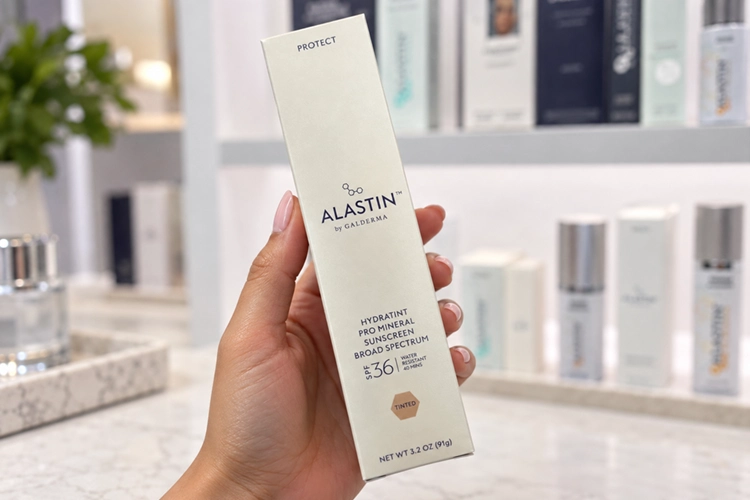
Brand: ALASTIN Skincare
Format: Cream
Activity & Use Case: Daily Face Wear, Post-Procedure Skin, Under-Makeup/Primer
Filter Type: Mineral
SPF Level & Broad Spectrum: SPF 36, Broad Spectrum
Active Ingredients: 8.9% Titanium Dioxide, 3.4% Zinc Oxide
Fragrance: Fragrance-Free
Water Resistance: 40 min
Special Features: Cruelty-free, Reef-friendly, Paraben-free, Gluten-free
Price: Around $75.05–$84.00 for 3.2 fl oz (91 g)
I have a complicated relationship with mineral sunscreens. My skin is combination-leaning-dry, sensitive, and prone to redness, and while I love the idea of mineral protection, I don’t always love the thick texture, white cast, or powdery finish that can come with it.
That is why ALASTIN Skincare HydraTint Pro Mineral SPF 36 caught my attention. It combines mineral UV filters with a universal tint, antioxidants, and a primer-like finish, so I put it through two weeks of everyday wear to see whether it could actually fit into my routine rather than simply look impressive on an ingredient list. The formula uses 8.9% titanium dioxide and 3.4% zinc oxide as its active mineral filters.
The Quick Verdict
Overall Rating: 8.1/10
Best For: Sensitive, redness-prone, hyperpigmentation-prone, and dry-to-combination skin that prefers a radiant, primer-like finish.
Skip This If: You have very fair or very deep skin and need a more precisely matched tint, prefer a completely matte finish, or want a budget-friendly sunscreen.
Packaging & Design
The first thing I noticed was that this doesn’t look like a typical beach sunscreen. It comes in an opaque airless pump bottle, which gives it a distinctly clinical, skincare-focused appearance.
The airless pump is more than just a design choice. Instead of relying on a conventional dip tube, the system uses a vacuum mechanism that helps limit exposure to air and moisture. That is useful because the formula contains several antioxidant ingredients that can be sensitive to environmental exposure.
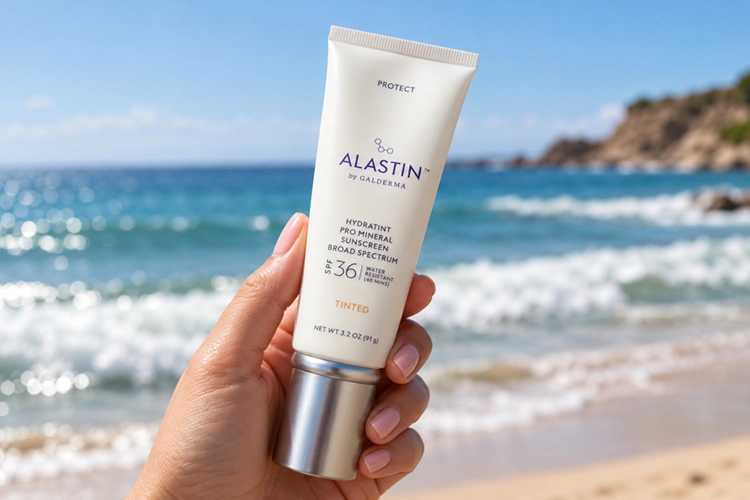
I also appreciated how clean the dispensing experience was. The pump delivers a consistent amount and the nozzle is designed to minimize dried-up product around the opening.
There is one drawback: the bottle is opaque, so I couldn’t see how much product remained inside. I had to judge the remaining amount by the bottle’s weight and eventually by how the pump behaved.
The standard size is a generous 3.2 fl oz (91 g), which is larger than many facial sunscreens.
Sun Protection & Formula
This is where HydraTint becomes much more interesting to me.
It is an all-mineral sunscreen, using titanium dioxide and zinc oxide rather than chemical UV filters. Titanium dioxide is particularly effective against UVB and shorter UVA wavelengths, while zinc oxide extends coverage further into the UVA range. Together, they provide the product’s labeled SPF 36 broad-spectrum protection.
The formula also goes beyond conventional UV protection.
Key Ingredients
- Titanium Dioxide 8.9%: A mineral UV filter that helps protect against UVB and UVA2 radiation.
- Zinc Oxide 3.4%: Broadens mineral protection, particularly into the longer UVA range.
- Iron Oxides: Provide the tint while also helping filter visible light, which is relevant when you’re concerned about hyperpigmentation.
- Ectoin: Helps support skin against stress associated with high-energy visible light.
- Thermus Thermophillus Ferment: A heat-activated biotechnology ingredient intended to help counter oxidative stress associated with infrared radiation.
- Phytoene & Phytofluene: Carotenoid antioxidants that help combat free-radical damage.
- Vitamin E: Provides additional antioxidant support.
I especially liked the inclusion of iron oxides. Sunscreen conversations tend to focus almost entirely on UV, but visible light can also be relevant for people dealing with pigmentation. The tinted iron oxide component adds another layer of protection against visible-light exposure.
The sunscreen is also rated for 40 minutes of water and sweat resistance, so I felt comfortable wearing it for ordinary humid days and light physical activity.
Texture & Finish
This was probably my biggest surprise.
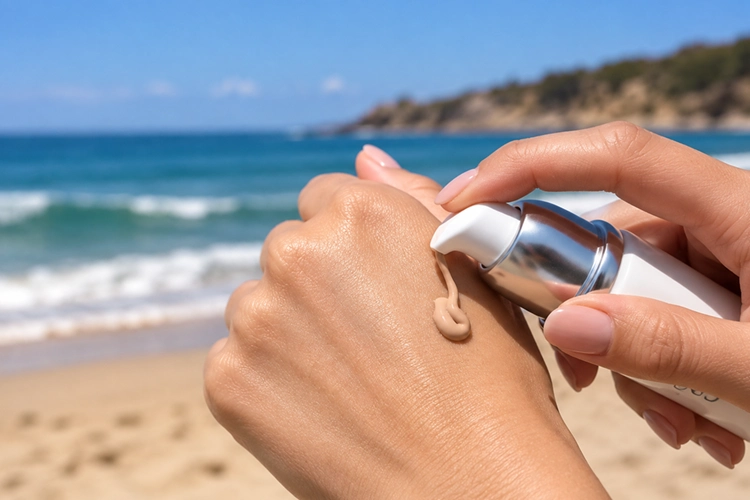
I expected something heavier because mineral sunscreens can sometimes feel dense or chalky. Instead, HydraTint has a light, fluid, silky texture that spreads surprisingly easily.
The formula uses silicones including Cyclopentasiloxane and Dimethicone, which give it plenty of slip. I didn’t have to aggressively rub it into my skin, and that matters to me because excessive rubbing can make already-sensitive skin look red.
The tint is doing a lot of work here. Rather than leaving the obvious white cast I often associate with high-mineral formulas, the iron oxide pigments visually balance the mineral filters.
On my skin, the result was more radiant and polished than matte. It took roughly 60 to 90 seconds to settle, after which I was left with a breathable, non-sticky layer.
The tint isn’t completely universal in practice, though. Very fair skin may find the warm undertone slightly deep if too much is applied, while deeper skin tones can still experience a faint mineral haze if the sunscreen isn’t thoroughly blended.
Scent
If you’re sensitive to fragrance, this is one of the easier parts of the review.
HydraTint is fragrance-free. There are no added perfumes, essential oils, or masking fragrances.
I could detect only a very faint neutral scent from the raw ingredients when applying it, but it disappeared quickly.
Personally, I prefer this approach in a facial sunscreen. I don’t need my SPF to smell like a tropical vacation, especially when I’m wearing it around my eyes and nose every day.
Skin Type & Compatibility
After two weeks, I can see why this formula would appeal to people with sensitive or reactive skin.
My own skin can become irritated when a sunscreen feels heavy, strongly scented, or difficult to remove. HydraTint avoided those particular problems for me.
The mineral filters sit on the skin rather than relying on organic chemical UV filters, and the formula also contains ingredients such as squalane, glycerin, green tea extract, and Ectoin. These give the sunscreen a more skincare-oriented feel rather than making it seem like a simple protective coating.
The formula is also described as non-comedogenic and oil-free in its positioning for acne-prone skin.
For anyone dealing with pigmentation, I think the tinted aspect deserves special attention. Iron oxides can help reduce exposure to visible wavelengths, which is particularly interesting for people whose dark spots tend to become more noticeable with light exposure.
Wearability & Daily Life
This is where HydraTint earned most of my appreciation.
It behaves almost like a hybrid between sunscreen, skincare, and makeup primer. The silicone-based formula smooths the appearance of uneven texture and fine lines, giving makeup something much more even to sit on.
On days when I didn’t want foundation, I could wear it alone and still feel like my skin looked more put together.
When I did wear makeup, I found that letting my moisturizer or serum dry completely first made the application smoother. Applying it over wet skincare can increase the chance of pilling.
One thing I would keep in mind is photography. The relatively high titanium dioxide content can create some flashback under direct camera flash, so this isn’t necessarily the sunscreen I’d choose for an event where I know I’ll be photographed extensively.
It also has 40-minute water and sweat resistance, but I wouldn’t interpret that as meaning it never needs reapplication.
Size, Lifespan, & Practicality
The 3.2 fl oz size is genuinely practical for a facial sunscreen.
At the recommended application amount of approximately 1/4 teaspoon for the face, the bottle provides roughly 75 facial applications, translating to around 2.5 months of once-daily face-only use. If I extend it to my neck and chest, that lifespan drops considerably, to roughly five to six weeks.
Interestingly, the bottle is also under the typical 3.4 fl oz/100 mL carry-on liquid limit, which makes the size reasonably travel-friendly.
My biggest practical warning is the tint. The iron oxide pigments can transfer onto light clothing or towels, particularly before the sunscreen has fully dried.
And because the formula forms a persistent silicone-mineral film, I wouldn’t rely on a quick splash of water and facial cleanser at night. I found the recommendation for double cleansing sensible: an oil cleanser or micellar water first, followed by a gentle face wash.
Brand Reputation & Ethics
ALASTIN operates as a premium physician-dispensed skincare brand under Galderma, with distribution through dermatologists, plastic surgeons, medical spas, and other professional channels.
The brand’s clinical focus is apparent throughout its product positioning. Its wider line is supported by more than 25 published clinical studies, according to the available product information.
On the ethics side, the brand is identified as cruelty-free, and the formula is made without oxybenzone or octinoxate. It is also described as paraben-free and gluten-free.
I appreciate seeing those details clearly stated, although I always think ethical claims are worth evaluating separately from how well a sunscreen performs on your own skin.
Price, Value, & Availability
This is definitely a premium sunscreen.
The listed price range is approximately $75.05 to $84 for 3.2 fl oz, putting it around $24.69 to $26.25 per fluid ounce.
That’s a lot of money for sunscreen, and I wouldn’t pretend otherwise.
What you’re paying for is not simply SPF 36. You’re getting an all-mineral formula, tint, antioxidants, a primer-like finish, airless packaging, and ingredients aimed at supporting protection beyond UV.
Availability is also more restricted than what you’d find with a drugstore sunscreen. It is primarily sold through authorized dermatology practices, plastic surgery clinics, medical spas, and selected verified online outlets. Unauthorized marketplaces are worth avoiding because of the risk of counterfeit, expired, or improperly stored products.
Overall Rating
After using ALASTIN HydraTint Pro Mineral every day for two weeks, I came away impressed by how successfully it bridges the gap between mineral sunscreen and complexion product.
My favorite part is the finish. Instead of leaving my skin looking coated in sunscreen, it gave me a smooth, healthy-looking glow that made me feel comfortable wearing it without foundation.
I also like that the formula doesn’t stop at UV filters. The combination of iron oxides, antioxidants, Ectoin, and other supporting ingredients makes the formulation more interesting than a basic tinted mineral SPF.
My biggest hesitation is the price, followed by the limitations of a single universal shade. Those are not small drawbacks, especially if you’re very fair or have a deeper complexion.
For my skin and my everyday routine, I’d give ALASTIN HydraTint Pro Mineral 8.1 out of 10. It’s an expensive sunscreen, but the texture, finish, sensitive-skin-friendly formulation, and makeup compatibility make it one I genuinely enjoyed reaching for during these two weeks.


Tips & Recommendations
If you’re thinking about trying it, I would keep a few things in mind.
First, apply enough. The beautiful finish shouldn’t tempt you to use less sunscreen simply because it also functions as a complexion product. The recommended facial application is approximately 1/4 teaspoon.
Second, give your skincare underneath it a moment to settle. I found that letting water-based serums and moisturizers dry first makes the application much smoother and reduces the possibility of pilling.
Third, don’t judge the tint from the first few seconds. Give it time to spread and settle before deciding whether the color works for you.
And finally, remember that 40-minute water resistance isn’t all-day waterproofing. If I’m swimming, sweating heavily, toweling my face, or spending extended time outdoors, I would reapply rather than relying on the morning application.
Overall, I think HydraTint makes the most sense for someone who wants mineral protection but doesn’t want their sunscreen to look or feel like a traditional mineral sunscreen. For me, the biggest win was simple: I actually enjoyed wearing it every morning, and that’s an underrated quality in a product I’m supposed to use every single day.
ALASTIN Skincare HydraTint Pro Mineral Tinted Sunscreen
- All-mineral SPF 36 using zinc oxide and titanium dioxide
- Fragrance-free and comfortable for sensitive skin
- Universal tint helps minimize the typical mineral white cast
- Iron oxides provide visible-light protection support
- Silky, lightweight, primer-like texture
- Leaves a radiant, non-sticky finish
- Works nicely underneath makeup
- 40-minute water and sweat resistance
- Airless pump helps protect the formula from environmental exposure
- Large 3.2 fl oz size
- Expensive compared with conventional sunscreens
- Universal tint may look warm on very fair skin
- Can leave a faint haze on some deeper skin tones
- Opaque packaging makes it difficult to know how much remains
- May transfer onto light clothing
- Can produce flashback in direct flash photography
- Requires more thorough cleansing at night